Starting an online business has become increasingly popular, with e-commerce being a significant driver of this trend. One of the most accessible ways to enter the e-commerce space is through dropshipping, a business model that allows entrepreneurs to sell products without holding any inventory.
Dropshipping has gained traction due to its low overhead costs and flexibility. It’s an attractive option for those looking to start an online business with minimal upfront investment.
By understanding the basics of e-commerce and dropshipping, entrepreneurs can unlock new opportunities and build successful online businesses.
Key Takeaways
- Understanding the e-commerce business model is crucial for online success.
- Dropshipping offers a low-risk entry into the e-commerce market.
- Starting an online business requires minimal upfront investment.
- E-commerce and dropshipping offer flexibility and scalability.
- Entrepreneurs can build successful online businesses with the right knowledge.
Understanding E-commerce and Dropshipping Basics
For entrepreneurs looking to start an online business, understanding e-commerce and dropshipping is crucial. These business models have transformed the retail landscape, offering new opportunities for entrepreneurs to reach customers worldwide.
What is E-commerce?
E-commerce, or electronic commerce, refers to the buying and selling of goods and services over the internet. It encompasses a wide range of business models, from online retail stores to digital marketplaces.
Types of E-commerce Business Models
- Business-to-Consumer (B2C): Selling products directly to consumers.
- Business-to-Business (B2B): Selling products or services to other businesses.
- Consumer-to-Consumer (C2C): Facilitating transactions between consumers.
What is Dropshipping?
Dropshipping is a fulfillment model where you, as an online retailer, do not keep products in stock. Instead, you partner with a supplier who ships products directly to your customers.
How Dropshipping Works
- You create an online store and partner with a supplier.
- You market and sell the supplier’s products.
- When a customer places an order, you forward the order and customer details to the supplier.
- The supplier ships the product directly to the customer.
Why These Business Models Are Popular
E-commerce and dropshipping have gained popularity due to their low startup costs, flexibility, and potential for scalability. They allow entrepreneurs to start and grow a business with minimal upfront investment.
| Business Model | Initial Investment | Risk Level |
|---|---|---|
| E-commerce | High | High |
| Dropshipping | Low | Low |
Key Differences Between Traditional E-commerce and Dropshipping
Understanding the nuances between traditional e-commerce and dropshipping is crucial for entrepreneurs looking to start an online business. While both models involve selling products online, they differ significantly in their operational strategies and requirements.
Inventory Management
Traditional e-commerce requires businesses to hold their own inventory, which can be costly and risky. In contrast, dropshipping allows businesses to sell products without holding any inventory, as products are shipped directly from the supplier to the customer.
Initial Investment Requirements
The initial investment for traditional e-commerce is typically higher due to the need to purchase and store inventory. Dropshipping, on the other hand, requires little to no upfront inventory costs, making it a more accessible option for new entrepreneurs.
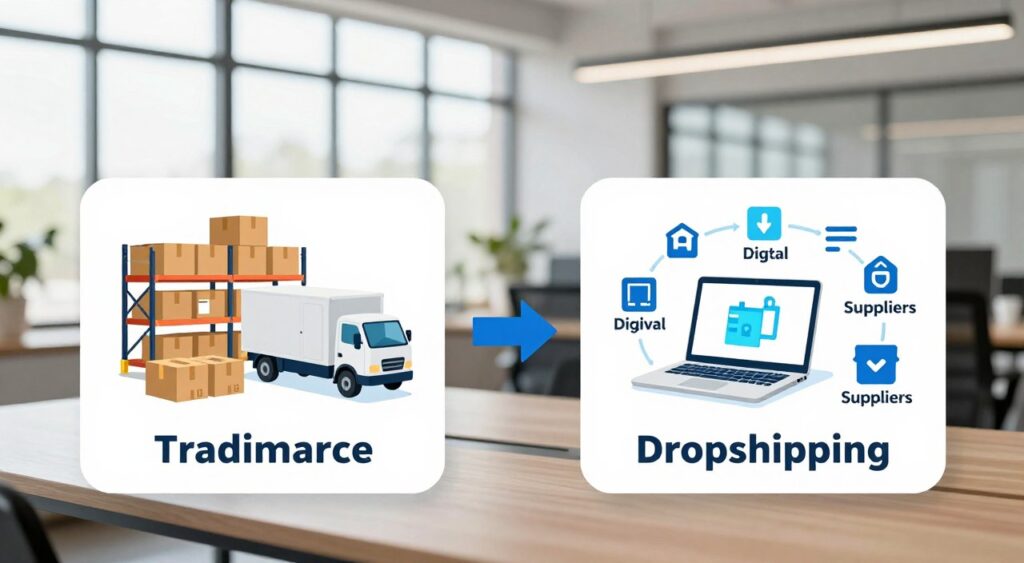
Profit Margins and Pricing Strategies
Profit margins in traditional e-commerce can be higher because businesses can control pricing and margins more effectively. In dropshipping, profit margins are generally lower due to the lack of control over supplier pricing.
Control Over Product Quality and Shipping
Traditional e-commerce businesses have more control over product quality and shipping times since they handle these aspects directly. Dropshipping businesses rely on suppliers for these aspects, which can sometimes lead to inconsistencies in quality and shipping times.
| Aspect | Traditional E-commerce | Dropshipping |
|---|---|---|
| Inventory Management | Holds own inventory | No inventory held |
| Initial Investment | Higher upfront costs | Lower upfront costs |
| Profit Margins | Potentially higher | Generally lower |
| Control Over Quality and Shipping | More control | Less control, relies on suppliers |
Getting Started with Your Online Business
Starting an online business can be a daunting task, but with the right guidance, it becomes manageable. As you embark on this journey, it’s essential to understand the foundational elements required for a successful e-commerce startup.
Choosing Your Business Structure
The first step in establishing your online business is deciding on a business structure. This could be a sole proprietorship, partnership, LLC, or corporation. Each structure has its advantages and disadvantages, particularly in terms of liability, taxation, and complexity. For instance, an LLC offers personal liability protection and tax benefits, making it a popular choice for many online sellers.
Legal Requirements and Permits
Once you’ve chosen your business structure, you’ll need to comply with legal requirements and obtain necessary permits. This may include registering your business, obtaining an EIN, and securing any required licenses. The specific requirements vary by location and type of business, so it’s crucial to research the regulations applicable to your e-commerce business.
Setting Up Business Banking
Separating your personal and business finances is vital for managing your online business effectively. Opening a business bank account helps in keeping track of your income and expenses, making tax preparation easier, and maintaining a professional financial management system.
Creating a Business Plan
A comprehensive business plan is the roadmap for your e-commerce startup. It outlines your business goals, target market, marketing strategies, and financial projections. A well-crafted business plan not only guides your decisions but also is often required when seeking financing from investors or lenders.
Financial Projections
Financial projections are a critical component of your business plan, providing a forecast of your business’s financial performance. This includes projected income statements, cash flow statements, and balance sheets. Accurate financial projections help you understand the financial viability of your business and make informed decisions about investments and funding.
“A business plan is not just a document; it’s a strategic tool that guides your business decisions and helps you navigate the complexities of the e-commerce landscape.”
By carefully planning your business structure, complying with legal requirements, setting up appropriate banking arrangements, and creating a detailed business plan, you’ll be well on your way to establishing a successful e-commerce business.
Selecting the Right E-commerce Platform
An effective e-commerce platform is the backbone of any online business, influencing both customer experience and operational efficiency. With the rise of online shopping, selecting the right platform has become a critical decision for entrepreneurs venturing into e-commerce and dropshipping.
Popular Platform Options
The e-commerce landscape is dominated by several key players, each offering unique features and benefits. Shopify and WooCommerce are among the most popular choices, catering to different business needs.
Shopify, WooCommerce, and Other Solutions
Shopify is known for its user-friendly interface and comprehensive customer support, making it an ideal choice for beginners. WooCommerce, on the other hand, integrates seamlessly with WordPress, offering flexibility for those already familiar with the platform. Other solutions like BigCommerce and Magento also offer robust features tailored to specific business requirements.
Key Features to Consider
When selecting an e-commerce platform, several key features should be considered:
- Ease of use and setup
- Customization options
- Integration with third-party apps
- Security and compliance
Pricing and Scalability Factors
Pricing models vary across platforms, with some charging a flat monthly fee and others taking a commission on sales. Scalability is also crucial, as your business grows, the platform should be able to accommodate increased traffic and sales volume without compromising performance.
Mobile Optimization Requirements
In today’s mobile-first world, ensuring that your e-commerce platform is optimized for mobile devices is no longer optional. A responsive design that adapts to various screen sizes and devices is essential for providing a seamless customer experience.
By carefully evaluating these factors and understanding your business needs, you can select an e-commerce platform that supports your growth and success in the competitive online market.
Product Sourcing for Dropshipping Success
Effective product sourcing is the backbone of a successful dropshipping business. It involves finding the right products that appeal to your target audience, are profitable, and can be delivered efficiently. In this section, we’ll explore the key aspects of product sourcing that can make or break your dropshipping venture.
Finding Reliable Suppliers
The first step in product sourcing is identifying reliable suppliers. This involves researching potential suppliers, evaluating their product offerings, and assessing their reliability and customer service.
Domestic vs. International Suppliers
When choosing suppliers, one crucial decision is whether to opt for domestic or international suppliers. Domestic suppliers offer faster shipping times and easier communication, but may have a more limited product range. International suppliers, on the other hand, can provide a wider variety of products at competitive prices, but shipping times are longer, and there may be additional costs and complexities.
| Criteria | Domestic Suppliers | International Suppliers |
|---|---|---|
| Shipping Time | Faster | Longer |
| Product Variety | Limited | Wide Range |
| Cost | Potentially Higher | Competitive |
Product Selection Criteria
Selecting the right products is critical for dropshipping success. Products should be in demand, have a reasonable profit margin, and be of good quality. It’s also essential to consider the competition and ensure that the products align with your brand.
Managing Supplier Relationships
Building strong relationships with suppliers is vital. This involves clear communication, timely payments, and mutual respect. Good supplier relationships can lead to better pricing, priority access to products, and improved customer service.
Quality Control Strategies
Ensuring product quality is a significant challenge in dropshipping. To mitigate this, it’s essential to implement quality control strategies, such as ordering samples, monitoring customer feedback, and working closely with suppliers to address any quality issues.
By focusing on these aspects of product sourcing, you can establish a solid foundation for your dropshipping business, ensuring that you offer high-quality products to your customers while maintaining a competitive edge in the market.
Marketing Strategies for E-commerce and Dropshipping
Marketing plays a pivotal role in the growth and sustainability of e-commerce and dropshipping ventures. With the ever-increasing competition in the online marketplace, businesses must adopt effective marketing strategies to stand out and attract customers.
Social Media Marketing Techniques
Social media platforms offer a vast opportunity for e-commerce and dropshipping businesses to reach their target audience. Techniques such as creating engaging content, utilizing influencer marketing, and running targeted ads can significantly enhance brand visibility and drive sales.
- Identify the right platforms for your target audience
- Create engaging and shareable content
- Leverage influencer partnerships
Search Engine Optimization Basics
SEO is crucial for improving the visibility of your e-commerce or dropshipping website in search engine results. By optimizing product listings, using relevant keywords, and ensuring a user-friendly website design, businesses can increase their organic traffic.
- Conduct thorough keyword research
- Optimize product descriptions and meta tags
- Improve website loading speed and mobile responsiveness
Email Marketing for Customer Retention
Email marketing is a powerful tool for retaining customers and encouraging repeat business. By sending personalized emails, offering exclusive promotions, and keeping customers informed about new products, businesses can build strong relationships with their customers.
- Segment your email list for targeted campaigns
- Create compelling and personalized content
- Monitor and adjust your email marketing strategy based on analytics
Paid Advertising Approaches
Paid advertising, including Facebook and Google Ads, can provide immediate visibility and drive traffic to your e-commerce or dropshipping store. By targeting specific demographics and interests, businesses can ensure that their ads reach the most relevant audience.
Facebook and Google Ads
Both Facebook and Google Ads offer robust platforms for e-commerce and dropshipping businesses to reach potential customers. By creating targeted ad campaigns, businesses can increase brand awareness, drive website traffic, and generate sales.
| Platform | Targeting Options | Ad Formats |
|---|---|---|
| Facebook Ads | Demographics, Interests, Behaviors | Image, Video, Carousel |
| Google Ads | Keywords, Location, Device | Text, Display, Shopping |
Conclusion: Building Your Sustainable Online Business
Building a sustainable online business through e-commerce and dropshipping requires careful planning, execution, and ongoing optimization. By understanding the basics of these business models and their key differences, you can make informed decisions that drive e-commerce success and dropshipping success.
Selecting the right e-commerce platform, sourcing high-quality products, and implementing effective marketing strategies are crucial steps in establishing a thriving online business. As you navigate the world of e-commerce and dropshipping, focus on creating a seamless customer experience, managing supplier relationships, and continually adapting to changes in the market.
By following the guidelines outlined in this article, you can lay the foundation for a sustainable online business that generates consistent revenue and grows over time. With persistence, dedication, and a willingness to learn, you can achieve e-commerce success and build a profitable online business that meets your goals.