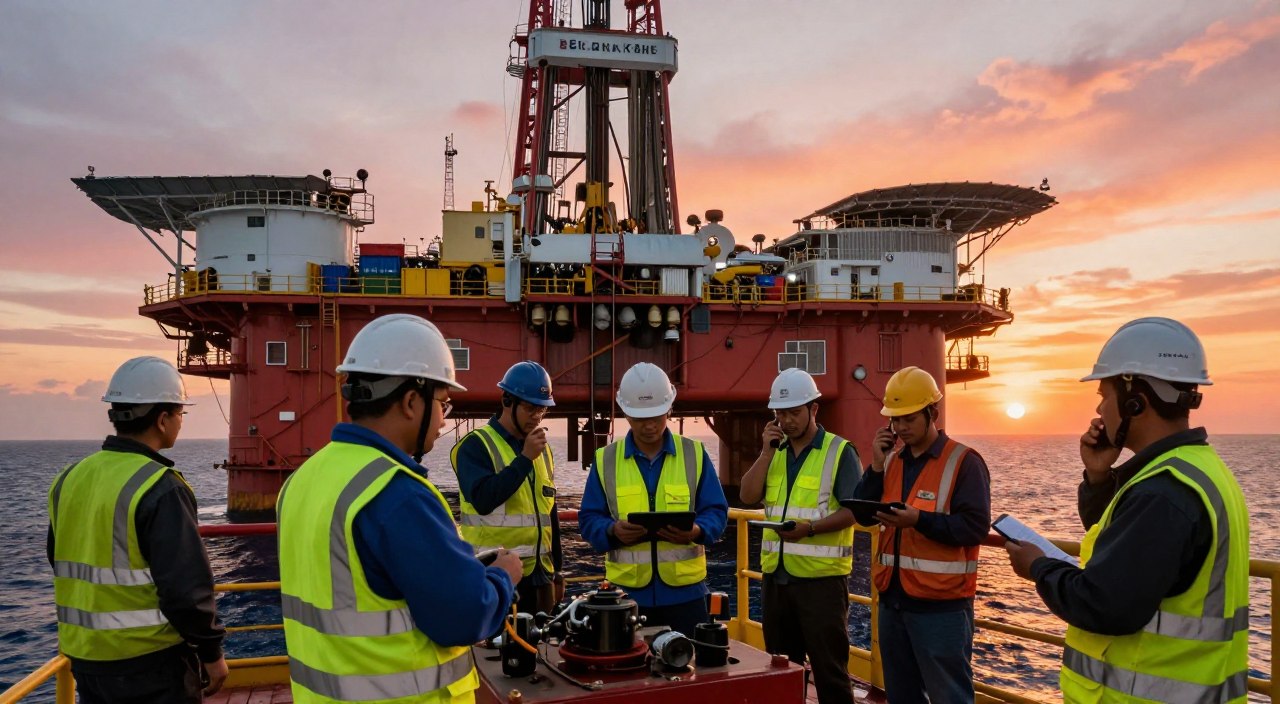
Securing a position in the ocean energy sector provides a unique lifestyle and impressive pay. Many people seek platform-based employment because it offers a chance to save money quickly. These roles allow you to travel while building a solid future for your family.
Finding stable marine work is not just about physical strength. It requires real dedication and a very strong spirit. You can find many entry-level tasks that fit different skill levels and backgrounds.
Exploring varied station opportunities means understanding the various certifications needed. Most crews enjoy extended breaks after weeks of intense service. If you are ready for a challenge, this path might be your best professional move.
Key Takeaways
- High earnings in the maritime sector.
- Essential safety certifications.
- Demanding physical work conditions.
- Long rotational schedules at sea.
- Diverse entry-level paths available.
- Opportunity for global travel.
Understanding Offshore Oil Rig Jobs and the Industry
Offshore oil rig jobs are part of a vast and intricate industry that requires a diverse range of skills and expertise. The oil and gas industry is a significant sector that contributes to the global energy supply, and offshore drilling careers play a crucial role in this contribution.
The industry involves the exploration, extraction, and production of oil and natural gas from beneath the Earth’s surface, often in challenging offshore environments. Offshore oil rigs are complex operations that demand highly skilled workers, from entry-level positions to specialized technical roles and management.
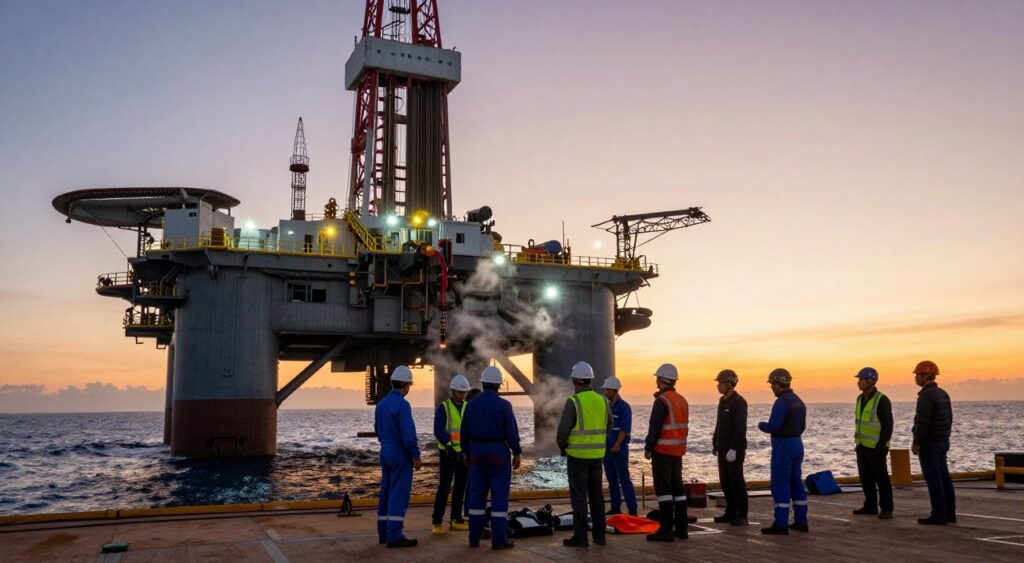
The types of jobs available on offshore oil rigs vary widely, including roles in drilling, maintenance, safety, and support services. The industry is constantly evolving, with advancements in technology and changes in global energy demands influencing the types of jobs available and the skills required.
Understanding the current state of the industry is essential for those considering offshore drilling careers. Factors such as market trends, regulatory changes, and technological innovations impact the industry’s landscape and job opportunities.
By grasping the complexities of the offshore oil rig industry, individuals can better navigate the job market and identify opportunities that align with their skills and career aspirations. Whether you’re just starting out or looking to advance your career, the offshore oil and gas sector offers a range of possibilities for professional growth and development.
Types of Offshore Oil Rig Jobs Available
The offshore oil rig industry offers a diverse range of job opportunities for individuals with varying skill levels and interests. From entry-level positions to senior management roles, the industry caters to a broad spectrum of career aspirations.
Entry-Level Roustabout and Roughneck Positions
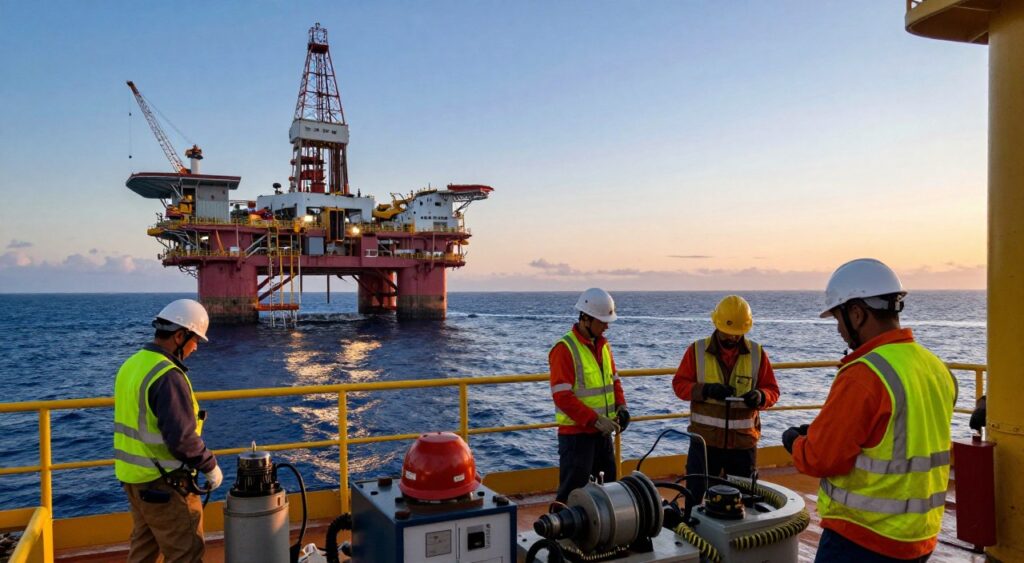
Entry-level positions on offshore oil rigs are typically filled by roustabouts and roughnecks. Roustabouts perform general labor tasks, including cleaning, maintenance, and assisting other crew members. Roughnecks, on the other hand, are involved in drilling operations, handling drill pipes, and performing other physically demanding tasks.
These roles are crucial for the smooth operation of the rig and provide a foundation for career advancement. Many rig workers start as roustabouts or roughnecks and move up to more specialized positions with experience and additional training.
Skilled Technical and Specialized Roles
Offshore oil rigs require a range of skilled technical and specialized personnel. These include drillers, who oversee the drilling process; electricians and electronics technicians, who maintain electrical and electronic systems; and mechanics, who are responsible for the upkeep of machinery and equipment.
Other specialized roles include mudloggers, who analyze drilling mud for signs of oil or gas, and geologists, who interpret geological data to guide drilling operations. These positions require specific training and experience, often involving certifications and continuous professional development.
Supervisory and Management Positions
Supervisory and management roles on offshore oil rigs are critical for ensuring operational efficiency and safety. Drilling supervisors and rig managers oversee the entire drilling operation, making strategic decisions and coordinating with other departments.
These senior roles require extensive experience in the oil and gas industry, as well as strong leadership and management skills. They are responsible for implementing safety protocols, managing budgets, and ensuring compliance with regulatory requirements.
| Job Category | Typical Roles | Key Responsibilities |
|---|---|---|
| Entry-Level | Roustabout, Roughneck | General labor, drilling assistance, maintenance |
| Skilled Technical | Driller, Electrician, Mechanic | Drilling operations, electrical and mechanical maintenance |
| Supervisory/Management | Drilling Supervisor, Rig Manager | Operational oversight, strategic decision-making, safety management |
Offshore Oil Rig Job Salaries: What You Can Expect to Earn
Understanding the financial rewards of offshore oil rig jobs is crucial for potential applicants. The salaries for these positions can be quite lucrative, reflecting the challenging nature of the work and the specialized skills required.
Offshore oil rig jobs offer competitive compensation packages that include not just the base salary but also various benefits and bonuses. The total remuneration can vary widely based on factors such as the specific job role, level of experience, and the company offering the employment.
Entry-Level Oil Rig Worker Salaries
Entry-level positions on offshore oil rigs, such as roustabouts and roughnecks, provide a solid foundation for a career in the industry. These roles typically require less experience and offer salaries that are competitive with other entry-level positions in the energy sector.
The average salary for an entry-level roustabout can range from $40,000 to $60,000 per year, depending on the company and location. Roughnecks, who perform more physically demanding tasks, can earn slightly higher salaries, often between $50,000 and $70,000 annually.
Mid-Level and Specialized Position Pay Ranges
As workers gain experience and specialized skills, their earning potential increases significantly. Mid-level positions, such as driller assistants or crane operators, can command higher salaries due to their critical roles on the rig.
For instance, a driller assistant can earn between $80,000 and $120,000 per year. Specialized roles like electricians or mechanics on offshore rigs can earn similar or even higher salaries, often ranging from $100,000 to $150,000 annually.
Senior-Level and Management Compensation
Senior-level positions and management roles on offshore oil rigs come with substantial salaries, reflecting their importance in overseeing operations and ensuring safety and efficiency.
A senior driller or a rig manager can earn salaries ranging from $150,000 to over $200,000 per year. These figures can be even higher for top management positions or for those with extensive experience and a proven track record in the industry.
Additional Pay Benefits and Bonuses
In addition to base salaries, offshore oil rig workers often receive various benefits and bonuses that can significantly enhance their total compensation package.
| Position | Salary Range | Benefits and Bonuses |
|---|---|---|
| Roustabout | $40,000 – $60,000 | Free accommodation, meals, health insurance, performance bonuses |
| Roughneck | $50,000 – $70,000 | Free accommodation, meals, health insurance, overtime pay |
| Driller Assistant | $80,000 – $120,000 | Comprehensive benefits, bonuses for safety records, overtime |
| Rig Manager | $150,000 – $200,000+ | Extensive benefits, performance bonuses, profit-sharing schemes |
These benefits can include free or subsidized accommodation and meals while on the rig, comprehensive health insurance, and bonuses for performance, safety records, or overtime work. Some companies also offer profit-sharing schemes or other incentives that can further boost the total earnings.
Requirements and Qualifications for Offshore Oil Rig Jobs
Offshore oil rig jobs demand a unique blend of physical stamina, technical skills, and safety certifications. The industry is known for its rigorous demands, and potential candidates must be prepared to meet these challenges head-on.
Basic Eligibility and Age Requirements
To be eligible for offshore oil rig jobs, candidates typically must be at least 18 years old and have a high school diploma or equivalent. Some positions may require additional education or certifications.
Physical Fitness and Medical Certifications
Working on an offshore oil rig is physically demanding. Candidates must be in good physical health and pass regular medical examinations. Specific medical certifications may be required, depending on the role.
Workers must be able to lift heavy objects, work at heights, and endure harsh weather conditions. A comprehensive medical check-up is usually a prerequisite for employment.
Essential Safety Certifications and Training
Safety is paramount in the offshore oil and gas industry. Workers are required to undergo rigorous safety training and obtain certifications such as Basic Safety Training (BST) and HUET (Helicopter Underwater Escape Training).
These certifications ensure that workers are equipped to handle emergencies and follow strict safety protocols.
Technical Skills and Experience Needed
Different roles on an offshore oil rig require varying levels of technical skill and experience. For instance, entry-level positions like roustabouts may require little to no experience but demand a willingness to learn.
In contrast, specialized roles such as drillers or electricians necessitate significant experience and specific technical qualifications. Continuous training and professional development are encouraged to enhance career prospects.
How to Apply for Offshore Oil Rig Jobs: A Step-by-Step Guide
To successfully apply for offshore oil rig jobs, it’s crucial to follow a systematic approach that covers everything from research to interview preparation. This comprehensive guide will walk you through the essential steps to increase your chances of securing a position on an offshore oil rig.
Research Major Offshore Oil Companies and Contractors
The first step in your job application journey is to identify major offshore oil companies and contractors. Researching these companies will help you understand their specific requirements, company culture, and available positions. Utilize online resources, industry reports, and company websites to compile a list of potential employers.
Obtain Required Certifications Before Applying
Most offshore oil rig jobs require specific certifications, such as Basic Offshore Safety Induction and Emergency Training (BOSIET) or Helicopter Underwater Escape Training (HUET). Ensure you obtain these certifications before applying to enhance your eligibility and demonstrate your commitment to potential employers.
Craft a Targeted Oil Rig Resume
Your resume is often the first impression you make on potential employers. Craft a targeted resume that highlights your relevant skills, experience, and certifications. Tailor your resume to each job application, emphasizing the qualifications that match the job requirements.
Submit Applications Through Multiple Channels
To maximize your chances of getting hired, submit your applications through multiple channels. This includes company websites, job boards, and recruitment agencies specializing in offshore oil rig jobs. Diversifying your application channels increases your visibility to potential employers.
Prepare for Interviews and Assessment Tests
Preparation is key to acing interviews and assessment tests. Research common interview questions, practice your responses, and review the technical aspects of your job role. Additionally, prepare for any psychometric tests or physical assessments that may be part of the selection process.
By following these steps and staying focused on your goal, you can significantly improve your chances of securing a job on an offshore oil rig. Remember, persistence and preparation are crucial in this competitive industry.
Daily Life and Working Conditions on Offshore Oil Platforms
For those considering offshore oil rig jobs, understanding the daily routines and living conditions is crucial for making an informed decision. Working on an offshore oil platform is a demanding job that requires a unique blend of technical skills, physical stamina, and adaptability.
Work Schedules and Rotation Patterns
Offshore oil rig workers typically follow a rotational schedule, with common patterns including 14-day or 28-day rotations. During their time on the rig, workers often put in 12-hour shifts, with some rigs operating on a 24/7 basis. The demanding schedule is balanced by extended periods of leave between rotations.
Living Quarters and Onboard Facilities
Life on an offshore oil rig involves living in close quarters with colleagues. Modern rigs are equipped with comfortable accommodations, including private cabins, dining facilities, and recreational areas. These amenities help to create a sense of community and support the well-being of workers during their time on the platform.
Typical Daily Routines and Work Environment
A typical day for an offshore oil rig worker is highly structured, with tasks ranging from maintenance and operations to safety drills and training exercises. The work environment is often challenging, with workers exposed to harsh weather conditions and the physical demands of manual labor. Despite these challenges, many workers find the work environment to be rewarding and enjoy the strong bonds formed with their colleagues.
Understanding these aspects of offshore oil rig jobs is essential for anyone considering a career in this field. By knowing what to expect, individuals can better prepare themselves for the demands and rewards of working on an oil platform.
Key Benefits of Offshore Rig Employment
The benefits of working on an offshore oil rig extend beyond financial gains, encompassing personal growth and professional development. One of the most significant advantages is the lucrative salary packages that come with offshore oil rig employment opportunities. Workers in this field often earn higher wages compared to those in similar onshore positions.
In addition to financial benefits, career advancement opportunities are plentiful in the offshore oil rig sector. With experience, individuals can move into more senior roles or specialize in specific areas, enhancing their career prospects. The industry also offers a unique environment that fosters personal growth, as workers develop resilience, adaptability, and teamwork skills.
Moreover, oil rig employment often includes comprehensive benefits packages, including health insurance, retirement plans, and paid time off. The nature of offshore work, with its rotational schedules, allows for significant periods of rest and recuperation, contributing to a better work-life balance.
For those interested in oil rig careers or offshore rig careers, the industry provides a dynamic and challenging work environment that can be very rewarding. Whether you’re just starting out or looking to advance your career, the offshore oil rig sector offers numerous opportunities for professional development and personal fulfillment.
Challenges You’ll Face Working on Offshore Oil Rigs
Offshore oil rig jobs are not for the faint of heart, as they involve a range of physical and mental challenges. Workers on these rigs face harsh marine environments, including strong winds, rough seas, and extreme temperatures.
One of the significant challenges is the physical demand of the job. Workers often have to perform manual labor in difficult conditions, which can be strenuous and hazardous. Safety is a top concern, and while the industry has made significant strides in improving safety standards, the risk of accidents remains a constant threat.
Another challenge is the time spent away from home and family. Offshore oil rig workers typically work on rotational shifts, which can range from a few weeks to several months at a time. This prolonged absence can take a toll on personal relationships and mental health.
The table below summarizes some of the key challenges faced by offshore oil rig workers:
| Challenge | Description | Impact |
|---|---|---|
| Harsh Environment | Strong winds, rough seas, extreme temperatures | Physical strain, safety risks |
| Physical Demands | Manual labor in difficult conditions | Fatigue, injury risk |
| Time Away from Home | Prolonged absence due to rotational shifts | Strain on personal relationships, mental health |
Despite these challenges, many workers find offshore oil rig jobs rewarding due to the competitive salaries and benefits. Understanding these challenges is crucial for anyone considering a career in this field.
Career Progression and Advancement Opportunities
The offshore oil rig industry offers a range of career advancement opportunities for those willing to put in the effort. As you gain experience and develop your skills, you can move into more senior roles or specialize in a particular area.
Key areas for career advancement include:
- Technical specialization
- Supervisory and management roles
- Specialized fields like drilling, completion, and production
To progress in your career, focus on acquiring relevant certifications, building a strong professional network, and staying adaptable to new technologies and industry developments. Many companies also offer training programs to help employees develop the skills they need to advance.
Career progression in oil rig jobs not only means moving up the corporate ladder but also gaining expertise in specific areas. With dedication and hard work, individuals can achieve significant career growth and financial rewards in the offshore oil and gas industry.
Safety Training and Standards in Offshore Drilling Careers
The offshore drilling industry prioritizes safety above all else, implementing comprehensive training programs and stringent safety protocols. This emphasis on safety is crucial due to the high-risk nature of offshore drilling operations.
Industry Safety Protocols and Regulations
Offshore drilling careers involve working under strict safety regulations and protocols. These include:
- Regular safety drills and training exercises
- Adherence to international safety standards and guidelines
- Use of personal protective equipment (PPE) and safety gear
- Implementation of safety management systems
Oil rig safety certifications are mandatory for workers, ensuring they are equipped to handle emergencies and maintain a safe working environment. These certifications often include training in offshore drilling safety procedures and the use of safety equipment.
Emergency Response and Survival Training
Emergency response and survival training are critical components of safety training for oil rig jobs. Workers are trained to respond effectively in emergency situations, such as fires, evacuations, and medical emergencies. This training includes:
- Survival techniques and emergency equipment usage
- Firefighting and fire prevention methods
- First aid and medical response training
By emphasizing offshore oil rig safety and providing comprehensive training, the industry aims to minimize risks and ensure a safe working environment for all personnel involved in offshore drilling operations.
Conclusion
Pursuing a career in offshore oil rig jobs can be a lucrative and challenging opportunity for those willing to work in a demanding environment. With various roles available, from entry-level positions to senior management, there’s a wide range of offshore oil rig jobs to suit different skill sets and experience levels.
As discussed, salaries for offshore oil rig workers can be substantial, with additional benefits and bonuses. However, the job also comes with its set of challenges, including rigorous physical demands and time spent away from family.
For those interested in exploring oil rig employment opportunities, it’s essential to research major offshore oil companies and contractors, obtain necessary certifications, and craft a targeted resume. By doing so, individuals can increase their chances of securing a rewarding career in this field.
Whether you’re just starting your job search or looking to advance your career, offshore rig job vacancies are available for those who are qualified and willing to take on the challenges. Start your oil rig job search today and take the first step towards a fulfilling career in the offshore oil industry.